The independent appliance repair shop across the Pacific Northwest
Refrigerator Not Cooling
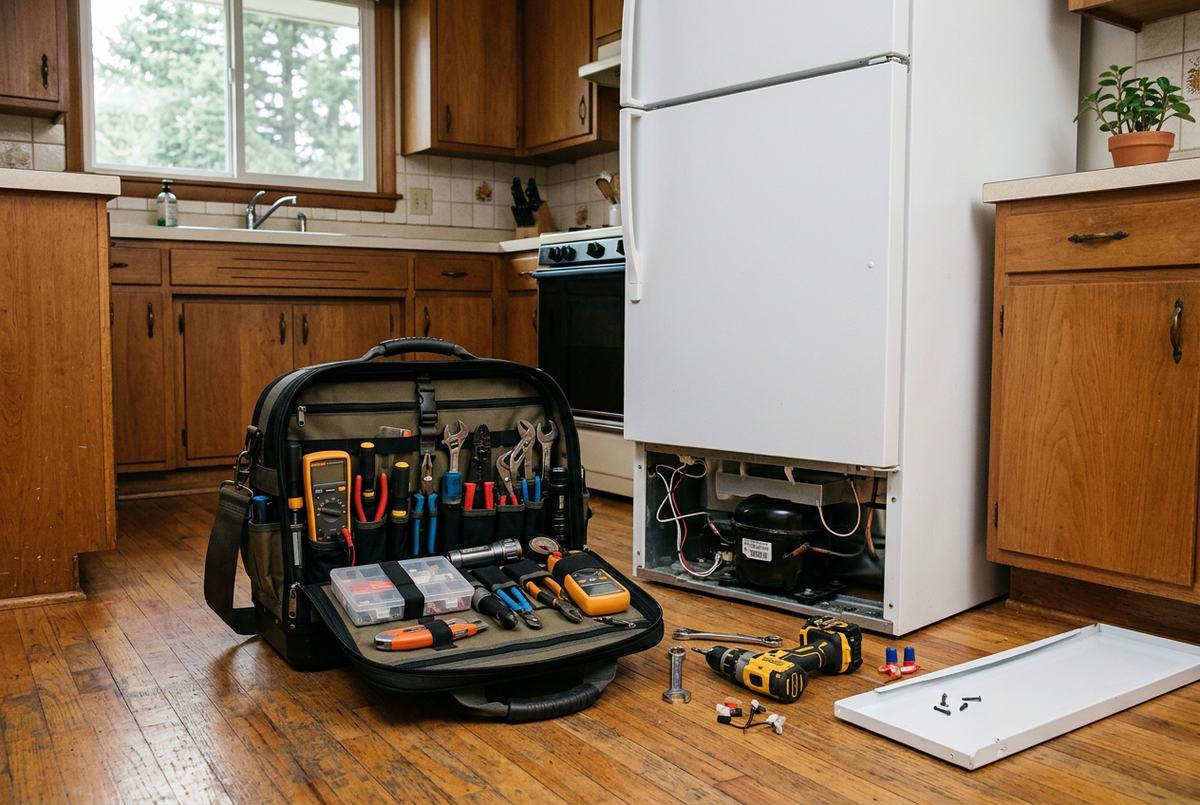
If your refrigerator is running but not cooling, we repair that, and it's one of the calls we get most often. This morning the milk was warm, the light came on, and you could hear something humming. Top shelf food is sweating and the freezer feels soft. Below is what's usually behind it, plus the few things you can safely check yourself before you call.
Call (888) 857-9883- You reach a person, not a menu
- Open every day
- The quote comes first, in writing
Taking calls until 5:00 PM PT
By the All About Appliances service team · reviewed by our working technicians
What "not cooling" actually tells us
A fridge doesn't make cold, it moves heat out. So when the inside warms up, something in that chain quit moving air or quit moving heat. The pattern matters. Freezer still hard-frozen but the fridge section warm points at airflow between the two compartments. Both warm with food thawing points deeper, toward the sealed system or the control side. Tell us which one you're seeing when you call us and we can bring the likely parts on the first trip. Note how long it's been drifting, too. A slow week-long warm-up reads differently than an overnight failure.
Cause family one: airflow and simple habits
This is the cheapest group, so it's worth ruling out first. Dust and pet hair pack the condenser coils underneath or behind the unit and the fridge can't shed heat. We see a lot of that in Portland basements and on back porches. Door gaskets are the other easy one. If the rubber seal is torn, stiff, or gummy with old jam, warm room air leaks in all night. Overpacked shelves block the vents inside, and a fridge stuffed to the ceiling after a Costco run will warm up in the top corners. So will a temperature dial somebody bumped reaching for the ketchup.
Cause family two: defrost and the evaporator fan
Behind the freezer wall sits a coil that gets frosty by design, and a heater melts that frost a few times a day. When the defrost system quits, ice builds into a solid block and air can't pass through anymore. The classic sign is a freezer that's still cold, a fridge that's climbing, and a puddle or sheet of ice on the freezer floor. The evaporator fan is the partner problem. If that fan seizes, cold air never reaches the fresh food side. You might hear a chirp or a rattle, or nothing at all where a soft whir used to be. Both need panels removed, so this is where homeowner checks stop.
Cause family three: compressor, controls, and refrigerant
Now we're in sealed-system and electrical territory. A start relay can fail and the compressor never spins up. The compressor itself can lose the ability to build pressure. Refrigerant can leak out through a corroded line, which we see in damp laundry rooms and garages. Control boards and thermistors drift too, telling the fridge it's already cold when it isn't. The symptoms overlap: quiet unit, warm everything, sometimes a click every few minutes. These repairs involve high-pressure lines, stored electrical charge, and EPA-regulated refrigerant. Please don't open panels or poke at wiring. Call us and we'll test it properly.
Safe checks you can do, and what we do differently
The safe list: confirm the outlet has power with a lamp. Check that the dial hasn't been knocked to a warm setting. Feel the gasket for tears, then shut a dollar bill in the door and see if it grips. Pull the fridge out and vacuum the coils, and leave a few inches of breathing room from the wall. Make sure the vents inside aren't blocked by casserole dishes. What we add: temperature readings at the evaporator and condenser, amp draw on the compressor, continuity tests on defrost heaters and thermostats, and pressure checks when we suspect the sealed system. We also look at the known weak points on your specific model.
Refrigerator Not Cooling — quick answers
Should I throw out the food?
Use the four-hour rule. Meat, dairy, and leftovers held above 40 degrees for more than four hours should go. Keep the door shut while you wait for us. A closed fridge holds cold much longer than an open one.
Why is my freezer fine but the fridge is warm?
Usually air isn't getting from the freezer over to the fresh food side. Common reasons are a frosted-over evaporator coil, a stalled circulation fan, or a stuck damper. All of those sit behind interior panels.
Is it worth repairing an older refrigerator?
Often yes, especially for a fan, gasket, defrost part, or relay. We'll tell you plainly what failed and what else looks tired, so you can decide whether to repair it or start shopping.
How it works
- Step 1
Tell us the symptom
Call us or fill out the form and describe what you're hearing, seeing or smelling. Brand and rough age help. We ask a few questions up front so the likely parts ride along in the van.
- Step 2
We come look
A technician shows up in the window we set, pulls the unit out and tests it. Tight basement stairs and low bungalow ceilings are ordinary to us. You'll hear what's wrong before anything gets replaced.
- Step 3
You decide, we repair
We walk you through the fix and what it involves, then wait for your go-ahead. Most common parts are already on the truck. If something has to be ordered, we tell you the plan and follow up.
- A real person answers
- Open 7 days
- Written quote before work starts
Why homeowners call us
- Damp-house know-howPortland laundry rooms grow mildew and basements stay wet. We know what moisture does to dryer vents, washer parts and control boards, so before we call a repair done we look at the room around the machine too.
- Unhurried visitsA rushed diagnostic misses things. We take the extra minutes to pull the panel, look behind the drum and test the drain line. Then we tell you plainly what failed and whether fixing it makes sense on that appliance.
- Every major brandWe're an independent shop, so the whole kitchen and laundry room is fair game: washers, dryers, refrigerators, ranges, ovens, dishwashers, freezers and disposals. A twenty-year-old unit gets the same careful look as a new digital one.
- Wide service reachHomeowners in five Western states reach us the same way. City bungalow, suburban split-level, a house down a gravel road. We set a visit and arrive with tools and common parts ready.
- All major brands, gas & electricOne independent crew for Whirlpool, Samsung, GE, LG, Maytag, Bosch and more.
- Straight answersWhen a repair doesn't make sense, we tell you, sometimes before we even roll a truck.
About this guide
Checked everything on the list and it still acts up?
Mention which checks you ran when you book; it speeds up the visit.
- A real person answers
- Open 7 days
- Written quotes
- All major brands
- Gas & electric
Rather not call? Get a free quote →